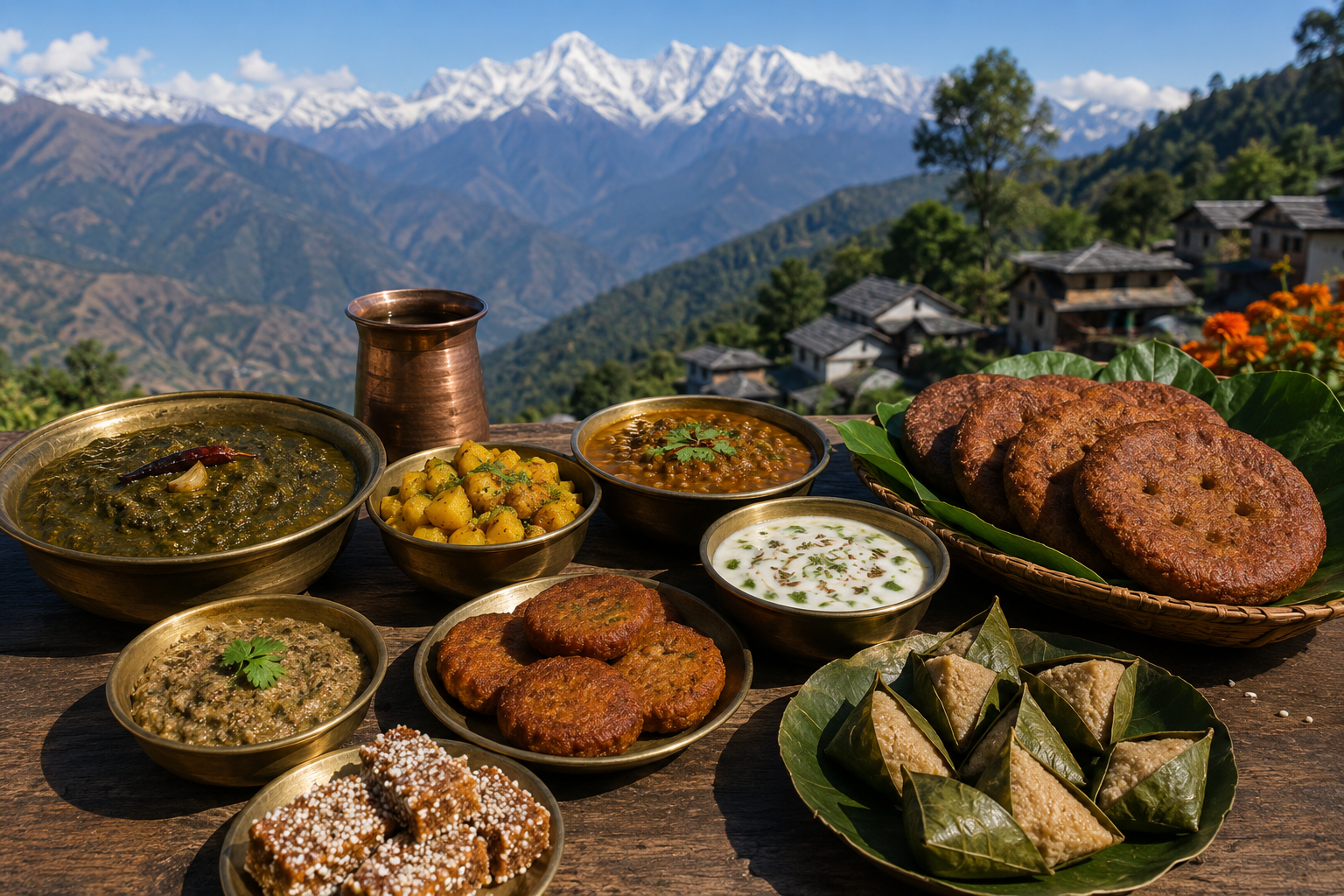
Traditional Uttarakhand cuisine is a reflection of mountain life—simple, seasonal, nutritious, and deeply connected to the land. Ingredients such as millets, lentils, leafy greens, local spices, and jaggery have been part of Himalayan food traditions for generations.
Every dish has its own character. Aloo Ke Gutke brings the warmth of a Pahadi kitchen, Chainsoo carries the smoky flavour of roasted lentils, Kafuli celebrates mountain greens, and sweets like Bal Mithai and Singori preserve the festive spirit of Kumaon.
Food in Uttarakhand is not merely about filling the stomach. It is about parampara (tradition), pahadi swaad (mountain flavour), and the memories shared around a warm meal.
🌿 “Pahad ki mitti ki khushboo, ghar ke chulhe ka swaad — Uttarakhand ke khaane mein basi hai apni si baat.”
From humble village kitchens to festive celebrations, the traditional food of Uttarakhand continues to preserve the taste and stories of the mountains.
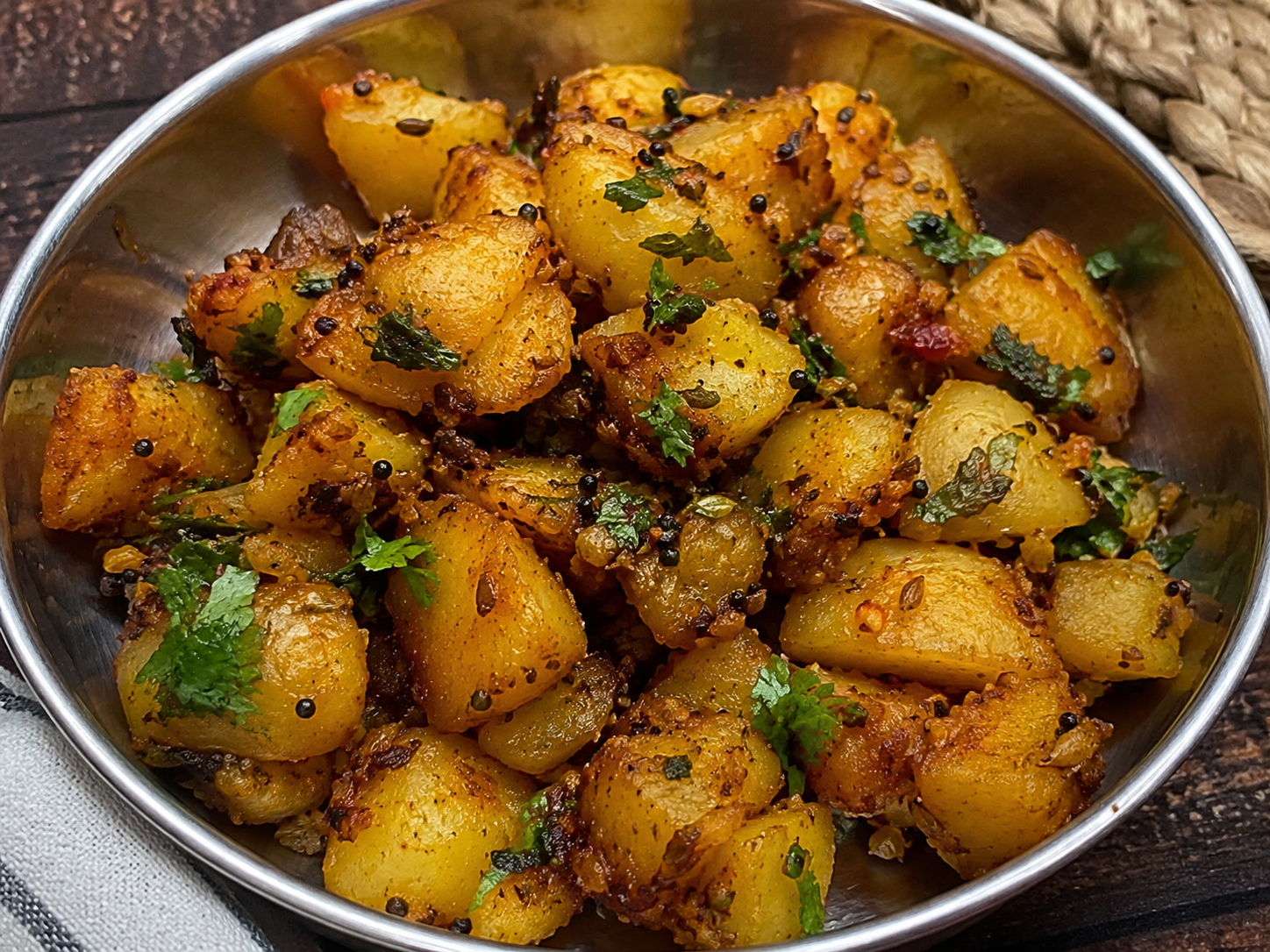
🥔 1. Aloo Ke Gutke
Aloo Ke Gutke is one of the most popular Pahadi dishes. It is a simple potato preparation made with local spices and traditionally cooked in mustard oil. It is often enjoyed with roti, rice, or Kumaoni raita.
Ingredients
- 4–5 medium potatoes
- 2 tablespoons mustard oil
- 1 teaspoon cumin seeds
- 1 teaspoon coriander seeds
- 2–3 dried red chillies
- ½ teaspoon turmeric powder
- ½ teaspoon red chilli powder
- Salt to taste
- Fresh coriander leaves
Recipe
- Boil the potatoes until they are cooked but still firm.
- Peel and cut them into medium-sized pieces.
- Heat mustard oil in a pan.
- Add cumin seeds, coriander seeds, and dried red chillies.
- Add the potatoes and mix gently.
- Add turmeric, red chilli powder, and salt.
- Cook on medium heat until the potatoes become slightly crispy.
- Garnish with fresh coriander and serve hot.
Pahadi Tip: Cooking the potatoes in mustard oil gives Aloo Ke Gutke its characteristic rustic flavour.
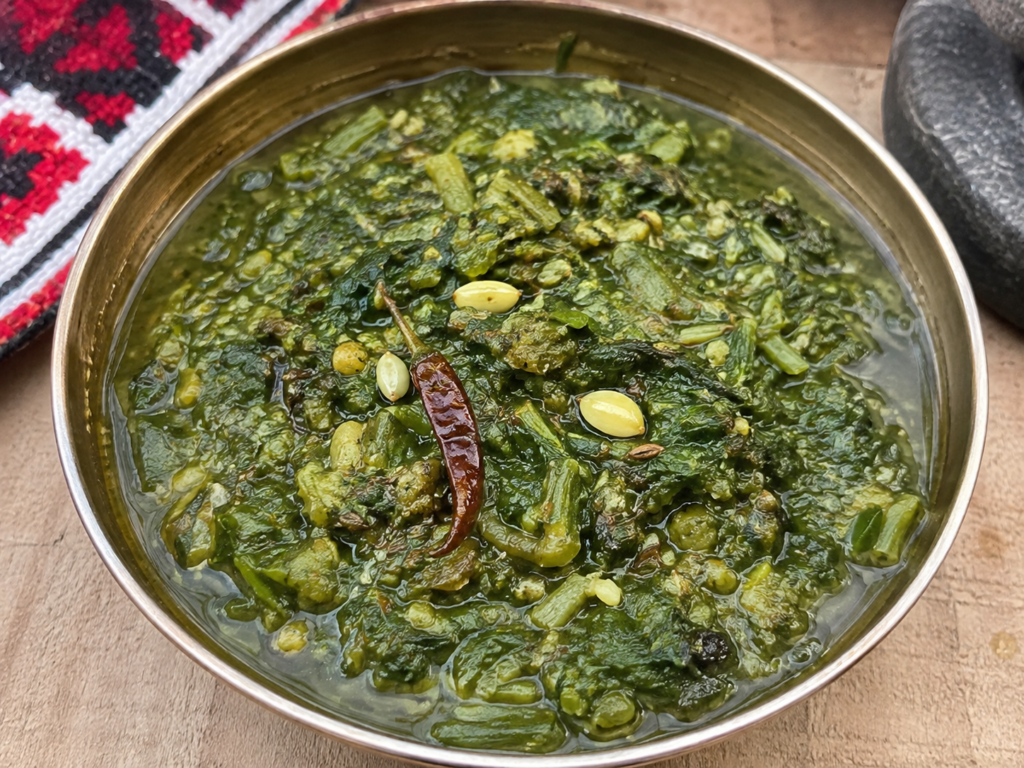
🌿 2. Kafuli
Kafuli is a nutritious traditional dish prepared mainly with green leafy vegetables such as spinach and fenugreek leaves. It is thick, wholesome, and especially comforting during the colder months.
Ingredients
- 2 cups spinach
- 1 cup fenugreek leaves
- 2–3 green chillies
- 2 tablespoons rice flour
- 1 teaspoon cumin
- 2 cloves garlic
- 1 tablespoon mustard oil
- Salt to taste
- Water as required
Recipe
- Wash the spinach and fenugreek leaves thoroughly.
- Chop them and cook them with green chillies and a little water.
- Once soft, mash or blend the cooked greens.
- Mix rice flour with a little water to make a smooth paste.
- Add the rice-flour mixture to the greens.
- Cook on low heat while stirring continuously.
- Heat mustard oil separately and add cumin and chopped garlic.
- Pour this tempering over the Kafuli.
- Add salt and simmer for a few minutes.
- Serve hot with rice or roti.
Why try it? Kafuli is a wonderful example of how Pahadi cuisine turns simple local ingredients into a nutritious meal.
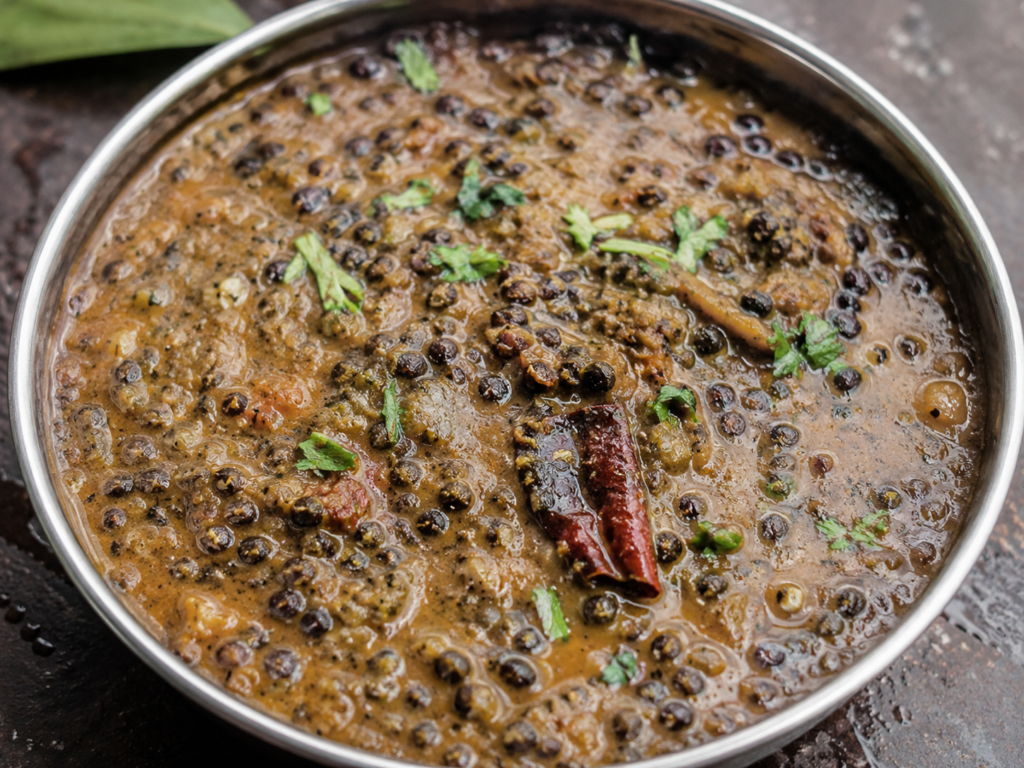
🫘 3. Chainsoo
Chainsoo is a traditional Garhwali dish made from roasted and ground lentils, commonly black gram (urad dal). Roasting the dal gives the dish its distinctive smoky and nutty flavour.
Ingredients
- 1 cup black gram (urad dal)
- 1 tablespoon mustard oil
- 1 teaspoon cumin
- 2–3 dried red chillies
- ½ teaspoon turmeric
- ½ teaspoon coriander powder
- 2 cloves garlic
- Salt to taste
- Water as required
Recipe
- Dry roast the urad dal in a pan until it becomes aromatic and lightly brown.
- Allow it to cool and grind it into a coarse powder.
- Heat mustard oil in a pan.
- Add cumin, dried red chillies, and garlic.
- Add the ground dal and roast it for a few minutes.
- Add turmeric, coriander powder, and salt.
- Slowly add water while stirring to prevent lumps.
- Simmer until the dal becomes thick and well cooked.
- Serve hot with steamed rice.
Pahadi Flavour: The secret to delicious Chainsoo is properly roasting the lentils before cooking.
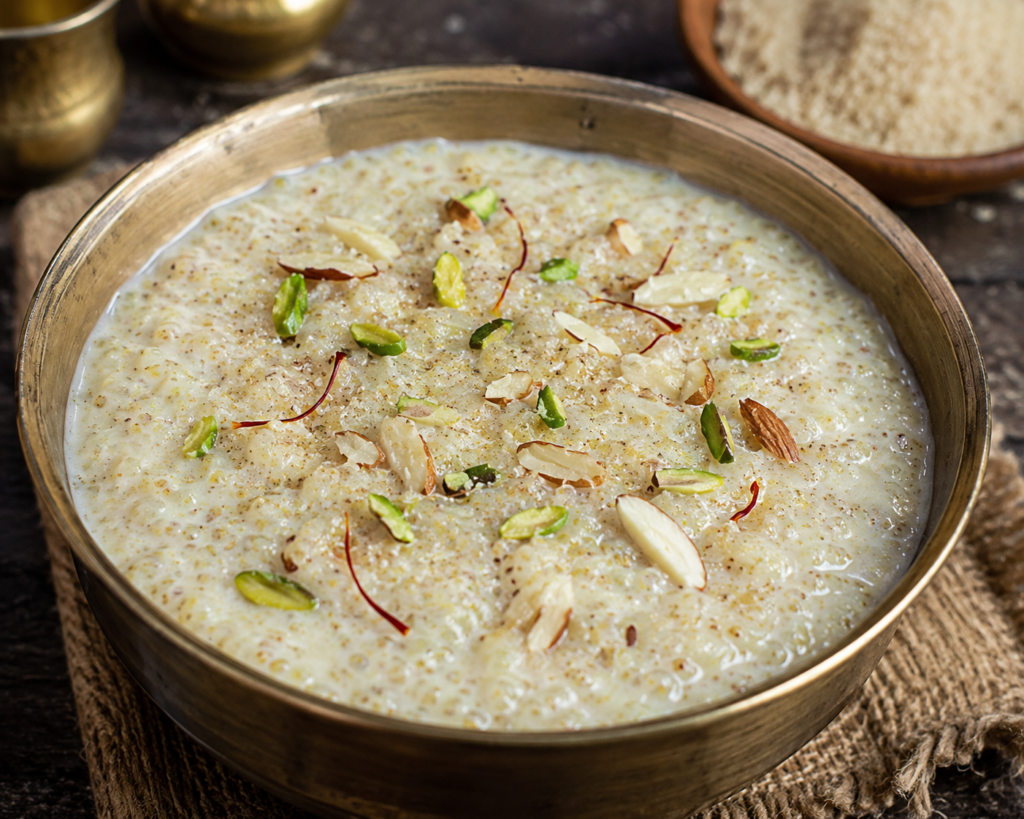
🌾 4. Jhangore Ki Kheer
Jhangore Ki Kheer is a traditional dessert made using jhangora (barnyard millet), a grain traditionally grown in the Himalayan region. It is creamy, mildly sweet, and often enjoyed during special occasions.
Ingredients
- ½ cup jhangora/barnyard millet
- 1 litre milk
- 4–5 tablespoons sugar
- 3–4 green cardamoms
- 1 tablespoon chopped almonds
- 1 tablespoon chopped cashews
- A few raisins
Recipe
- Wash the millet thoroughly.
- Soak it for about 20–30 minutes.
- Bring the milk to a boil in a heavy-bottomed pan.
- Add the soaked millet.
- Cook on low heat while stirring occasionally.
- Continue cooking until the millet becomes soft and the milk thickens.
- Add sugar and cardamom.
- Cook for another few minutes.
- Add chopped nuts and raisins.
- Serve warm or chilled.
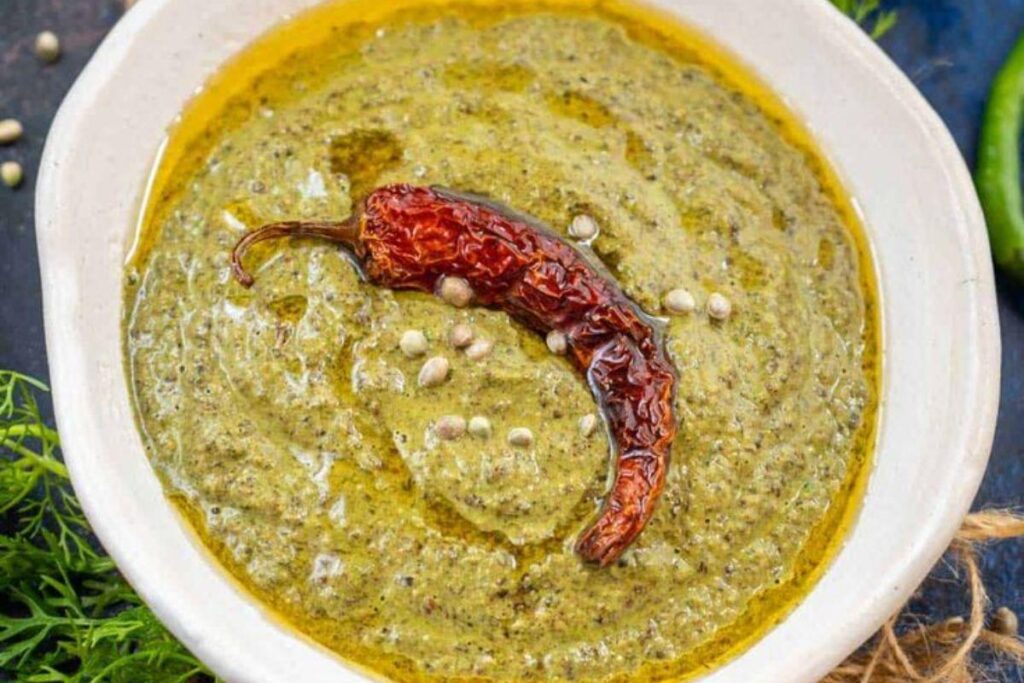
🥣 5. Bhaang Ki Chutney
Despite its unusual name, Bhaang Ki Chutney is a traditional Uttarakhand accompaniment made from roasted hemp seeds. It is known for its nutty, tangy, and spicy flavour and is commonly served with Pahadi meals.
Ingredients
- 3 tablespoons hemp seeds (bhang seeds)
- 1–2 green chillies
- 1 small tomato or a little lemon juice
- ½ teaspoon cumin
- Salt to taste
- Fresh coriander
- Water as required
Recipe
- Dry roast the hemp seeds until fragrant.
- Add the roasted seeds to a mortar and pestle or grinder.
- Add green chillies, cumin, coriander, and salt.
- Grind everything together.
- Add a little water to achieve the desired consistency.
- Add lemon juice or tomato for tanginess.
- Mix well and serve fresh.
Best with: Aloo Ke Gutke, dal, rice, or hot Pahadi rotis.
In Uttarakhand, chutneys are an important part of the traditional meal. Bhang Ki Chutney is particularly loved for its strong earthy flavour. It shows how mountain cuisine makes use of locally available ingredients rather than relying on complicated recipes.
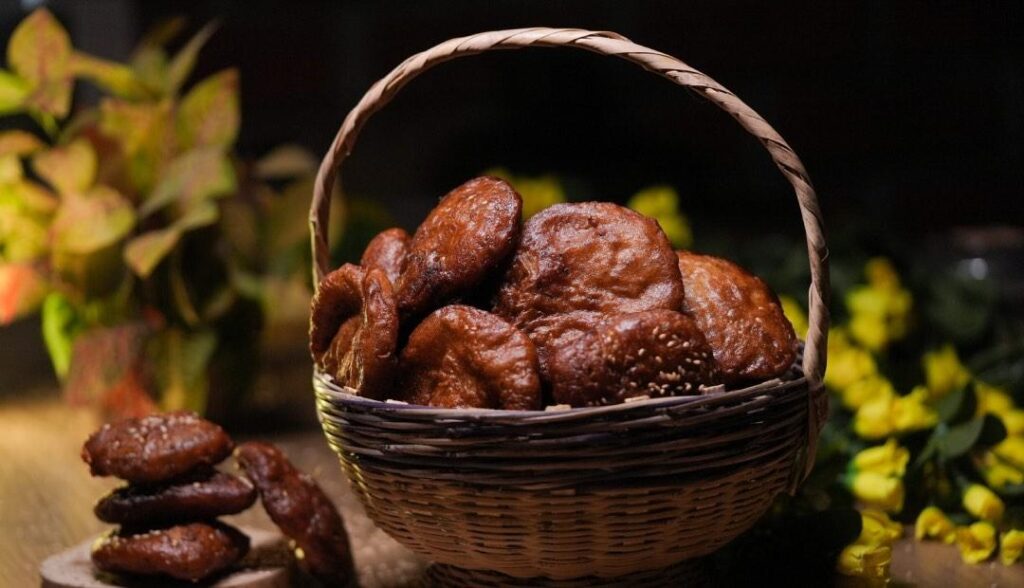
🥞 7. Arsa
Arsa is a traditional sweet associated with Uttarakhand and is especially prepared during festivals, weddings, and other celebrations. It is made using rice and jaggery and has a delicious caramelised flavour.
Ingredients
- 1 cup rice
- ¾ cup jaggery
- 2 tablespoons milk
- Oil or ghee for frying
- Water as required
Recipe
- Wash and soak rice for several hours or overnight.
- Drain the rice and grind it into a slightly coarse paste.
- Melt jaggery with a small amount of water.
- Strain the jaggery syrup to remove impurities.
- Mix the jaggery syrup with the rice paste.
- Add a little milk and mix into a thick batter.
- Let the batter rest for a few hours.
- Heat oil or ghee in a deep pan.
- Carefully drop small portions of batter into the hot oil.
- Fry until the Arsa turns deep golden brown.
- Drain and serve.
Traditional touch: Arsa is often prepared in homes during special occasions, making it more than just a sweet—it is part of Uttarakhand’s festive traditions.
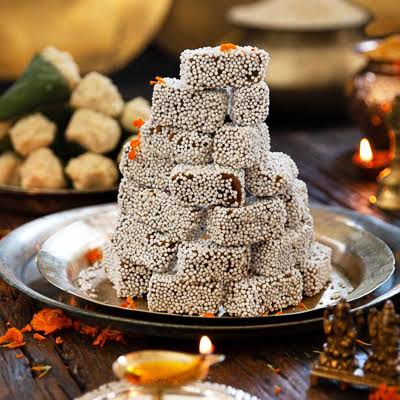
🍬 8. Bal Mithai
Bal Mithai is one of the most famous sweets of Uttarakhand, particularly associated with the Kumaon region. It is a dark brown milk-based sweet covered with tiny white sugar balls.
Ingredients
Traditional Bal Mithai requires careful preparation of khoya (reduced milk solids) and sugar, so the authentic version is usually prepared by experienced sweet makers.
Simple Preparation
- Cook khoya over low heat until it becomes thick and dark brown.
- Add sugar and continue cooking until the mixture becomes firm.
- Transfer the mixture to a greased tray.
- Allow it to cool and set.
- Cut it into rectangular pieces.
- Coat the pieces with small sugar balls.
- Allow them to set before serving.
Bal Mithai is a wonderful example of Kumaoni culinary heritage and is often taken home as a sweet reminder of a visit to the hills.
🍃 9. Singori
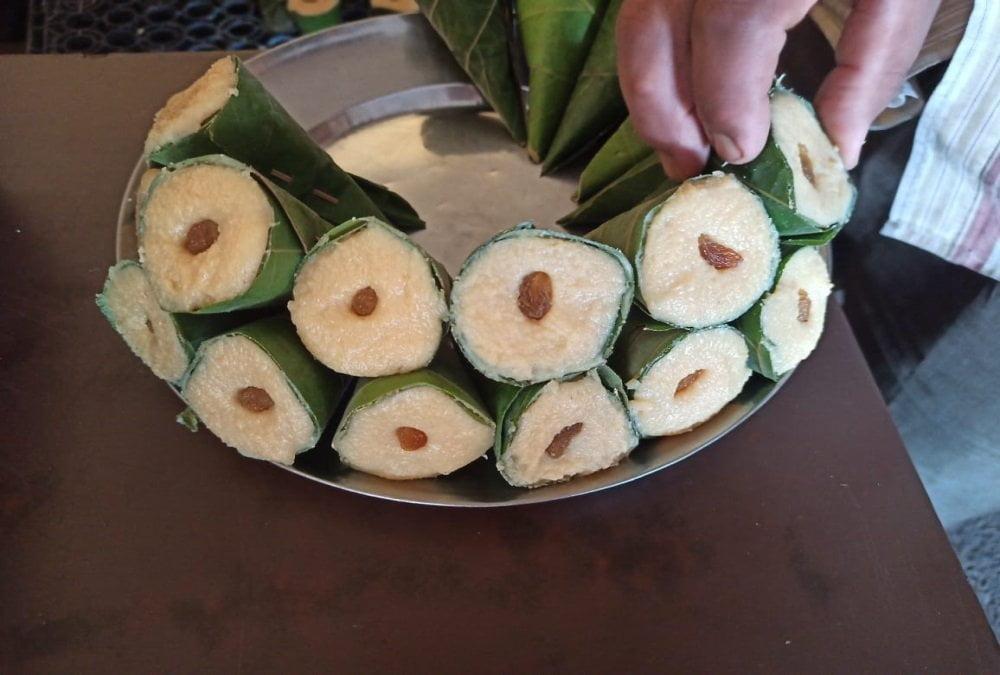
Singori is another beloved Kumaoni sweet. What makes it special is its presentation: the sweet is traditionally wrapped in a maalu leaf, which gives it a distinctive aroma and appearance.
Ingredients
- Khoya
- Sugar
- Cardamom powder
- Maalu leaves for wrapping
Recipe
- Cook khoya in a heavy pan on low heat.
- Add sugar and cardamom powder.
- Stir until the mixture becomes thick.
- Allow it to cool slightly.
- Take a small portion of the mixture and place it on a clean maalu leaf.
- Fold the leaf into a cone shape.
- Allow the Singori to cool and set.
- Serve chilled or at room temperature.
🥣 10. Kumaoni Raita
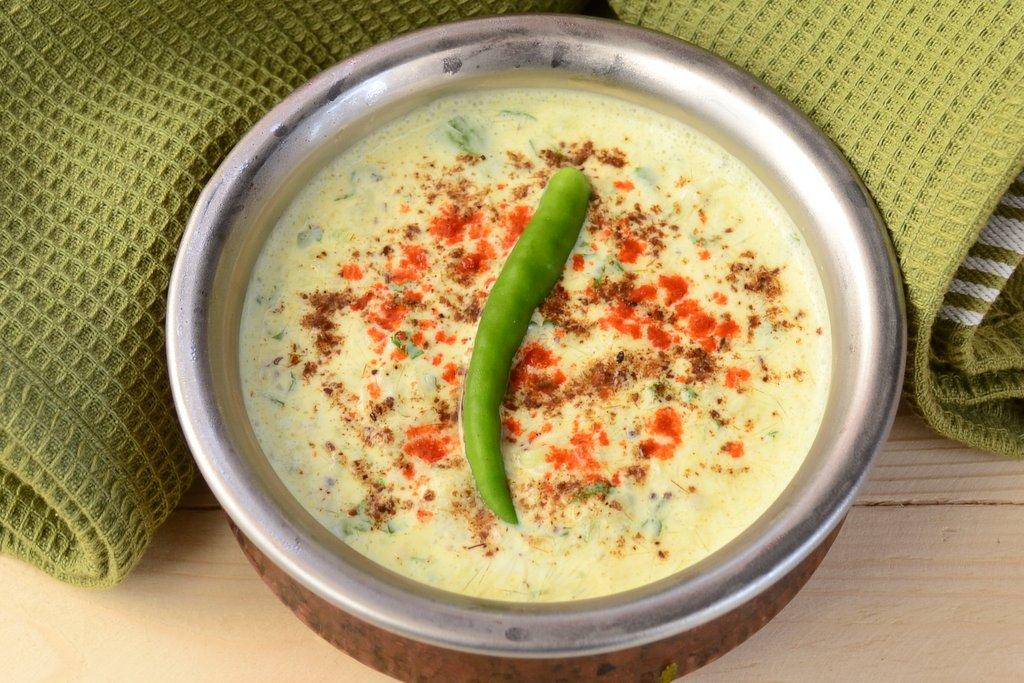
Kumaoni Raita is a refreshing yogurt-based side dish traditionally served with Pahadi meals. Cucumber and spices give it a cooling and flavourful taste.
Ingredients
- 2 cups fresh curd
- 1 cucumber
- 1 teaspoon roasted cumin powder
- ½ teaspoon red chilli powder
- Salt to taste
- Fresh coriander
Recipe
- Whisk the curd until smooth.
- Grate or finely chop the cucumber.
- Add cucumber to the curd.
- Add roasted cumin powder, chilli powder, and salt.
- Mix well.
- Garnish with coriander.
- Chill before serving.
It pairs especially well with Aloo Ke Gutke, dal, and rice.
🫓 11. Pahadi Rot
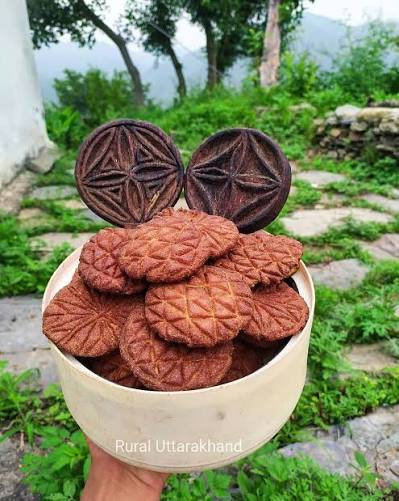
Pahadi Rot is a traditional sweet dish enjoyed in Uttarakhand, especially during festivals, religious occasions, and family celebrations. Made with wheat flour, jaggery, ghee, and fennel seeds, Rot has a deliciously rich flavour with a crispy outside and soft centre. It is a beautiful example of the simple yet flavourful cooking traditions of the hills.
Ingredients
- 2 cups wheat flour (atta)
- ¾ cup jaggery (gud), grated
- 3–4 tablespoons ghee
- 1 teaspoon fennel seeds (saunf)
- ½ teaspoon cardamom powder
- ½ cup warm water or milk, as required
- Ghee or oil for frying
Recipe
- Grate the jaggery and dissolve it in a little warm water or milk.
- Strain the jaggery mixture if needed to remove any impurities.
- Take wheat flour in a large bowl and add fennel seeds, cardamom powder, and 2 tablespoons of ghee.
- Gradually add the jaggery mixture and knead into a firm, smooth dough.
- Cover the dough and let it rest for about 15–20 minutes.
- Divide the dough into equal portions and shape each portion into a thick round disc.
- Heat ghee or oil in a heavy pan over medium-low heat.
- Carefully place the Rot into the hot ghee and fry slowly until golden brown and crisp on both sides.
- Remove and place on a plate lined with paper to drain excess oil.
- Allow it to cool slightly and serve with milk, curd, ghee, or a cup of hot Pahadi tea.
🌿 Pahadi Tip
For a more traditional flavour, use desi ghee and good-quality jaggery. Slow frying gives the Rot its characteristic golden colour, crisp edges, and rich aroma.
🌾12.Pahadi Baadi – A Simple Taste of the Mountains
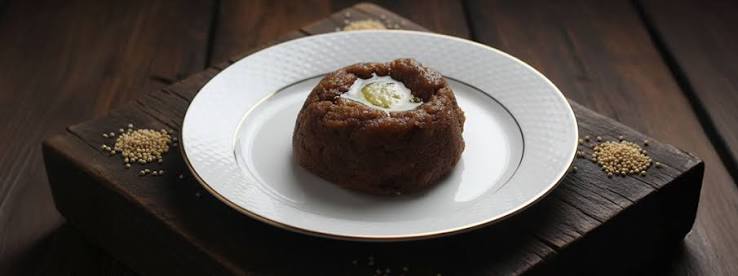
Baadi, also known as Mandua Baadi, is a traditional Uttarakhand dish prepared using mandua (ragi/finger millet) flour and water. It is especially associated with the simple, nutritious food traditions of the Himalayan villages.
Unlike the dried lentil badi used in curries, Mandua Baadi is a soft, thick preparation with a rustic appearance. It is traditionally cooked until the flour forms a dense, smooth clump and is often enjoyed hot with ghee, chutney, or Pahadi dal.
Ingredients
- 1 cup Mandua (Ragi) flour
- 2½–3 cups water
- 1–2 teaspoons ghee
- Salt, according to taste (optional)
For Serving
- Desi ghee
- Bhang ki chutney
- Kumaoni raita
- Pahadi dal or seasonal vegetable
No responses yet