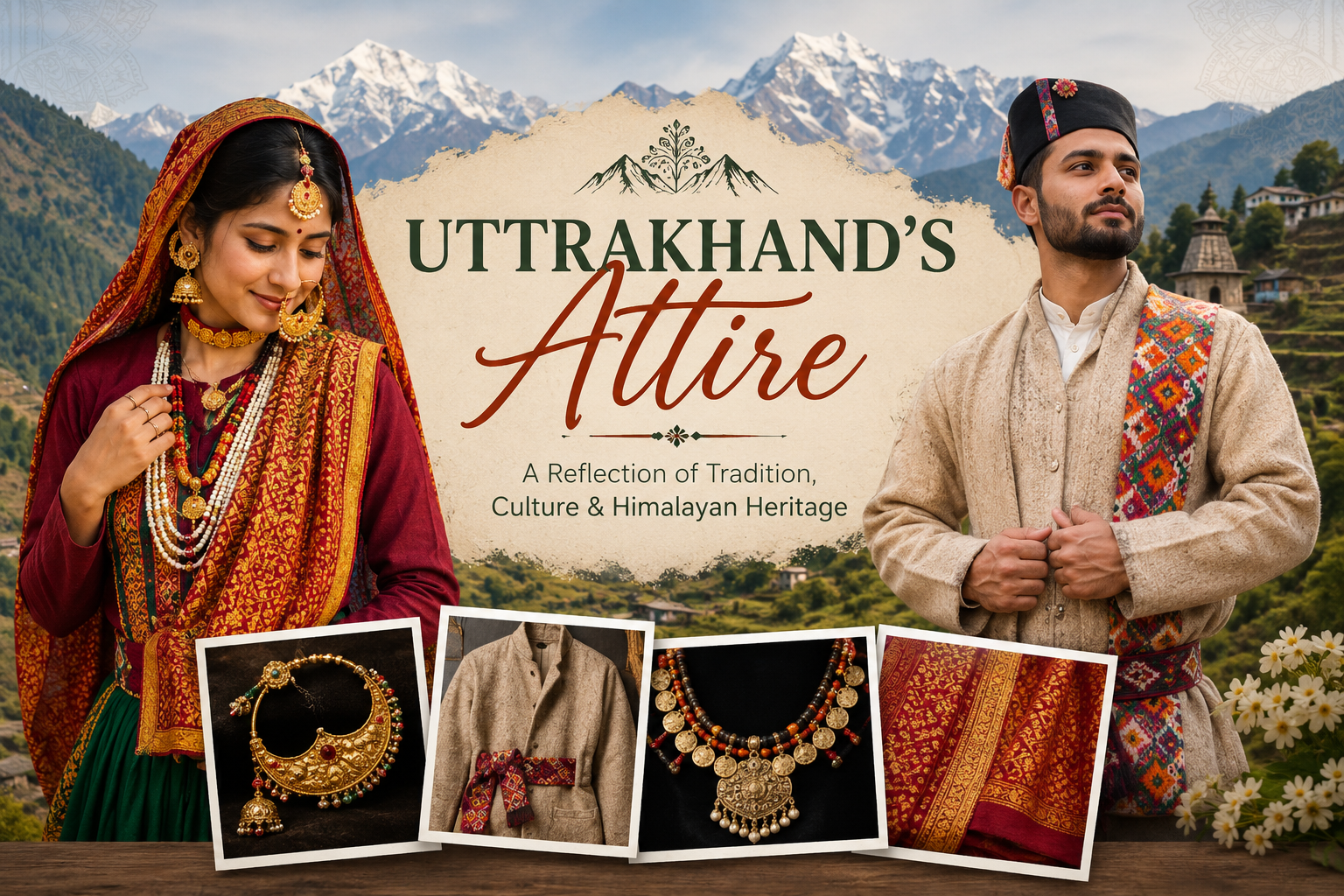
“Pahadon ki mitti ki khushboo, rang-birangi poshaak aur gehno ki chamak — Uttarakhand ki parampara uske libaas mein bhi nazar aati hai.”
Uttarakhand is not only known for its majestic mountains, ancient temples and beautiful valleys but also for its rich cultural heritage. Among its many traditions, traditional attire holds a special place. The clothing worn by the people of Uttarakhand reflects the region’s history, climate, lifestyle and deep connection with the mountains.
From the graceful Ghagra-Pichora worn by women to the traditional Kurta-Pajama and Churidar worn by men, Pahadi clothing carries the simplicity and elegance of Himalayan life.
👩 Traditional Attire of Pahadi Women
Traditional women’s clothing varies between the Garhwal and Kumaon regions, but both are known for their beautiful colours, graceful designs and cultural symbolism.
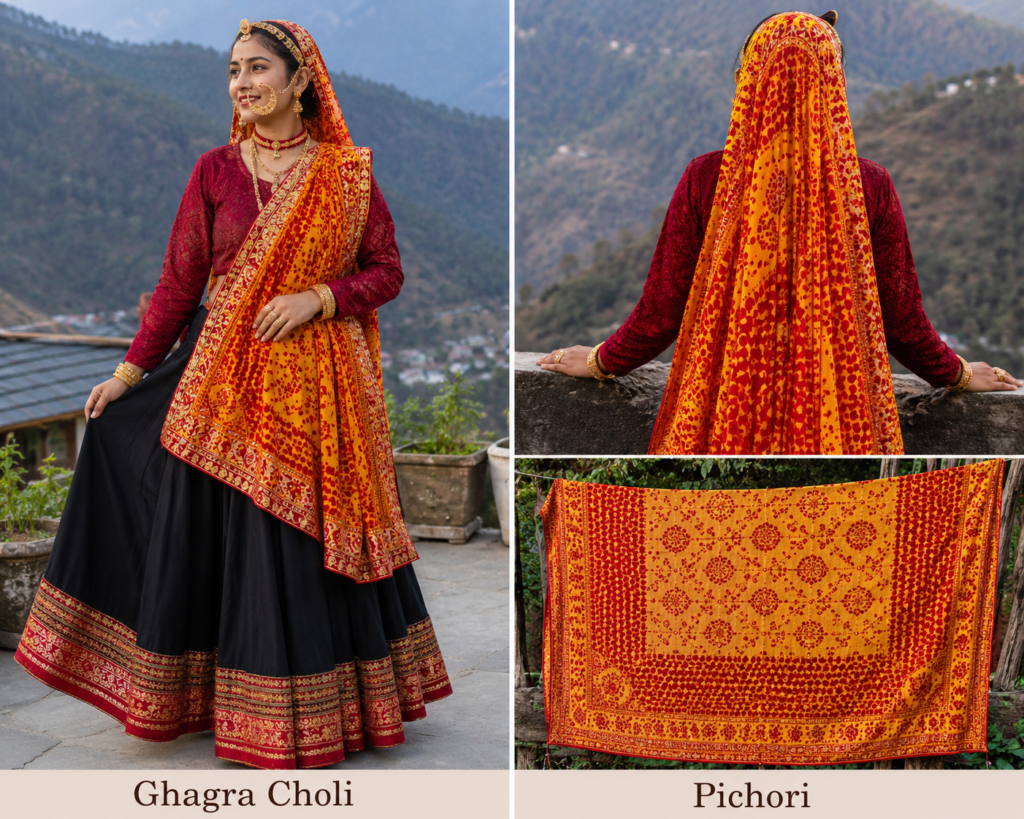
🌸 Ghagra, Choli & Pichora
The traditional Ghagra-Choli has long been associated with the women of the hills. The ghagra is generally paired with a blouse or choli and a traditional cloth worn over the head and shoulders.
In the Kumaon region, the Pichora is especially significant. It is a colourful, often yellow cloth decorated with red patterns and is traditionally associated with auspicious occasions such as weddings and religious ceremonies.
Pichora is more than just an accessory — it represents marital traditions, auspiciousness and Kumaoni cultural identity.
🧣 Rangwali Pichora
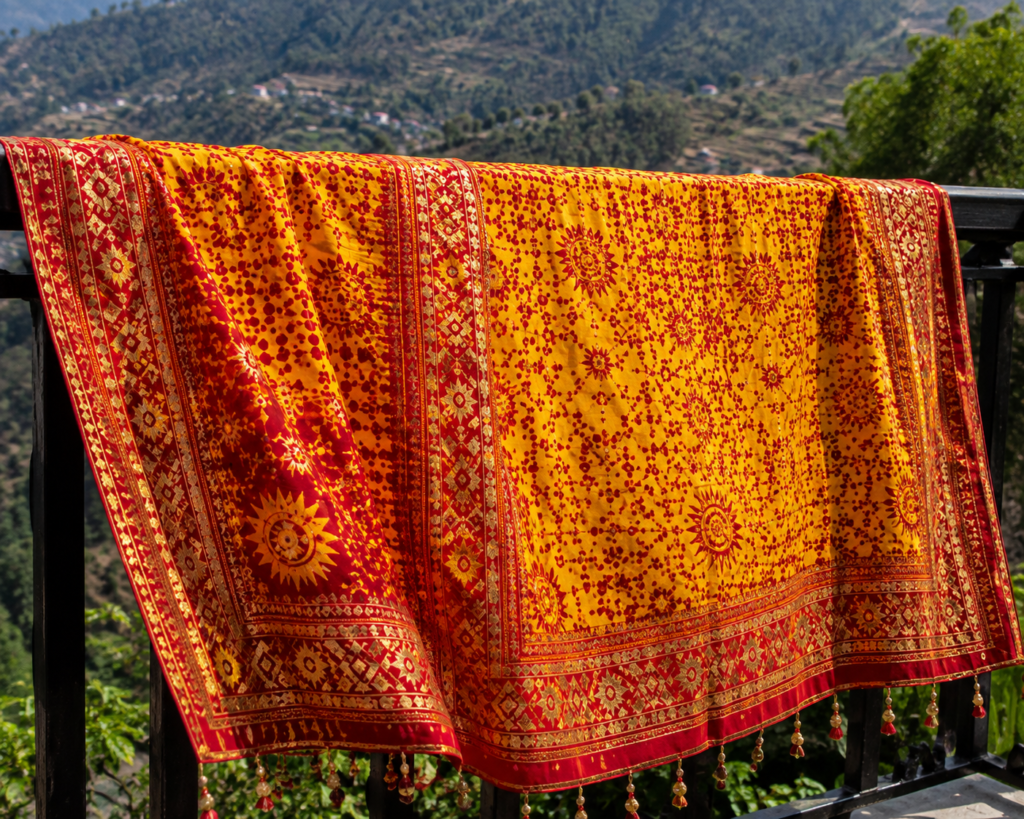
Rangwali Pichora is one of the most recognisable traditional garments of Kumaoni women. Its bright yellow and red colours make it particularly beautiful during weddings, festivals and other important ceremonies.
The traditional patterns often include motifs such as sun, flowers, bells and geometric designs, each adding to its cultural beauty.
👗 Ghagra & Angri
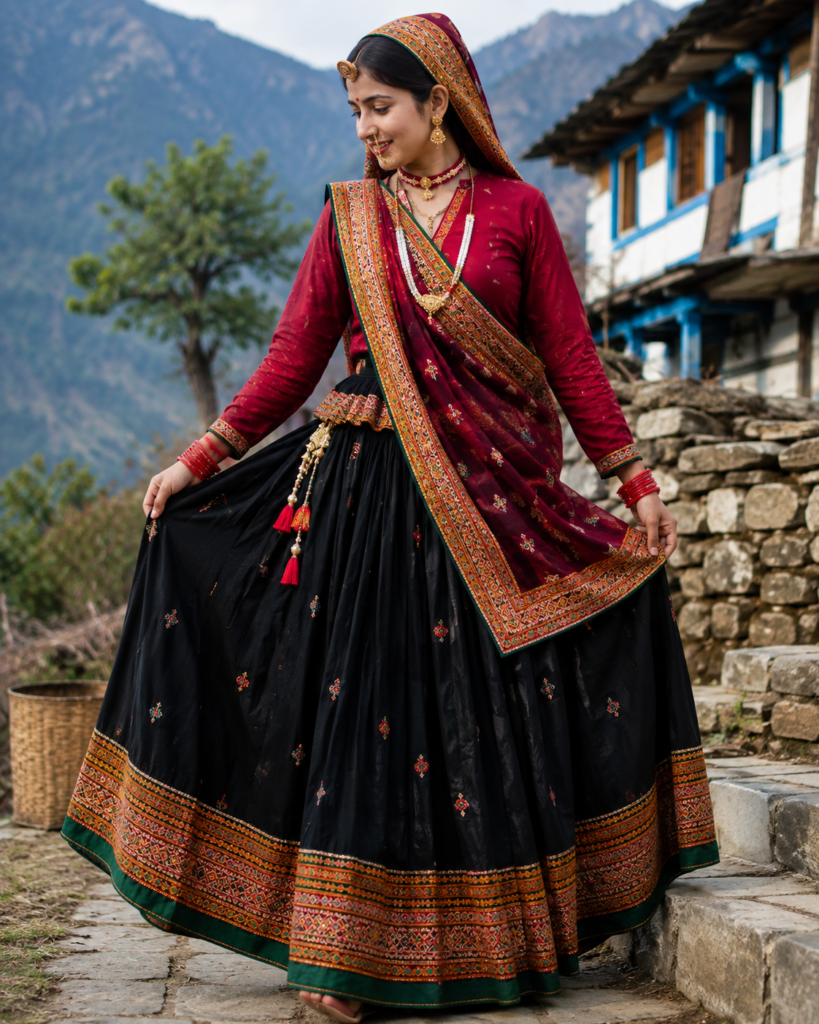
In parts of Garhwal, women traditionally wear a ghagra with an angri or blouse, along with a cloth covering the head and shoulders. Woollen clothing and shawls are also important because of the cold Himalayan climate.
The attire is both practical and beautiful, allowing women to stay comfortable while preserving traditional styles.
👨 Traditional Attire of Pahadi Men
Men’s traditional clothing in Uttarakhand is generally simple, comfortable and suited to the mountain lifestyle.
🧥 Kurta-Pajama
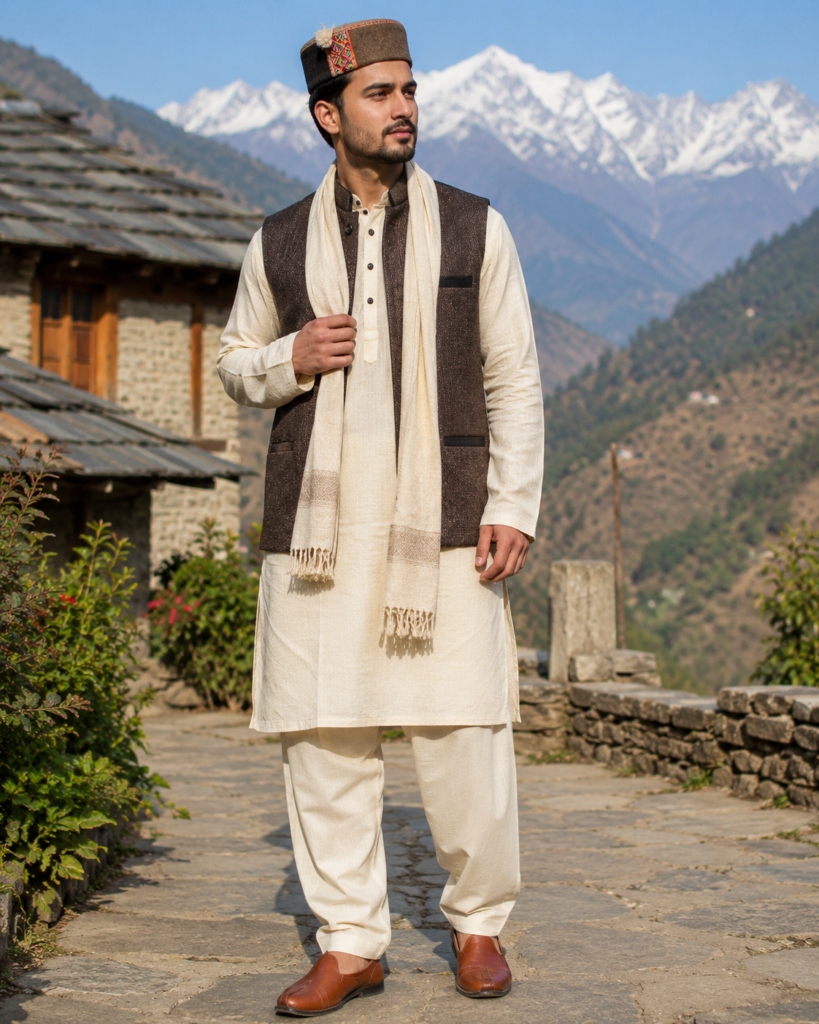
The Kurta-Pajama is one of the commonly recognised traditional outfits for men. It is often worn during festivals, religious ceremonies and cultural events.
🧢 Pahadi Topi
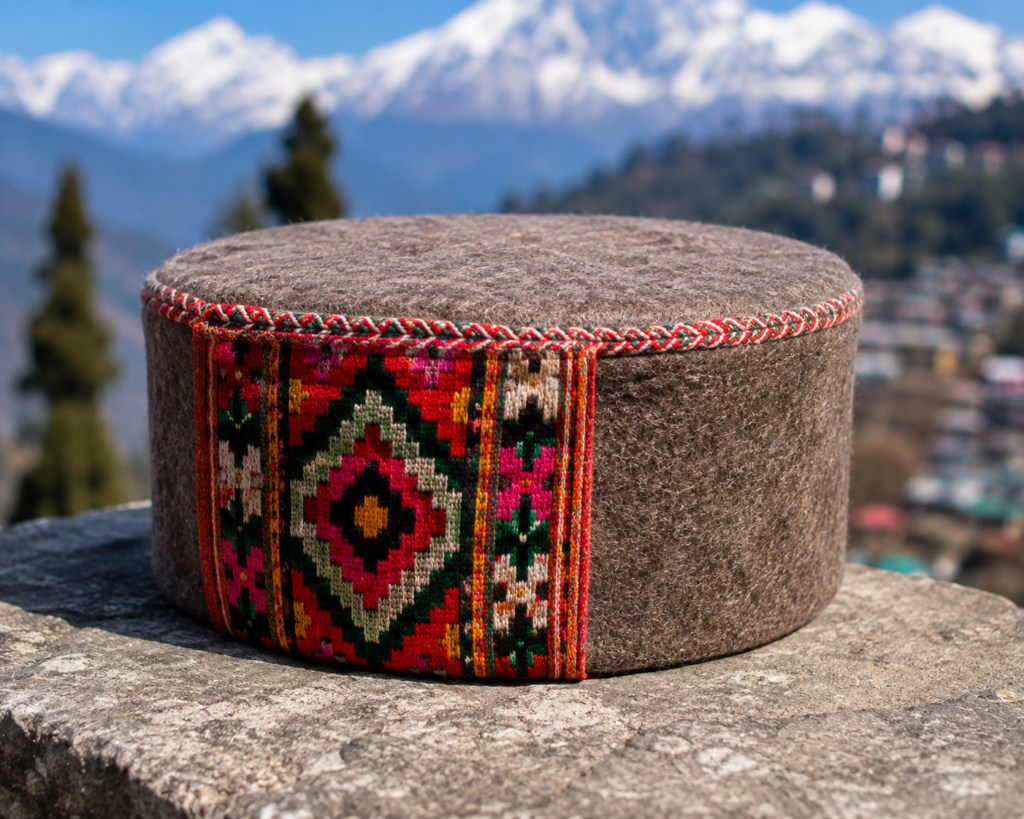
The Pahadi Topi is an important symbol of Uttarakhand’s traditional identity. Different areas have their own variations in colour, fabric and design.
The cap is often worn during cultural celebrations, weddings and traditional gatherings.
🧣 Sadri & Woollen Clothing
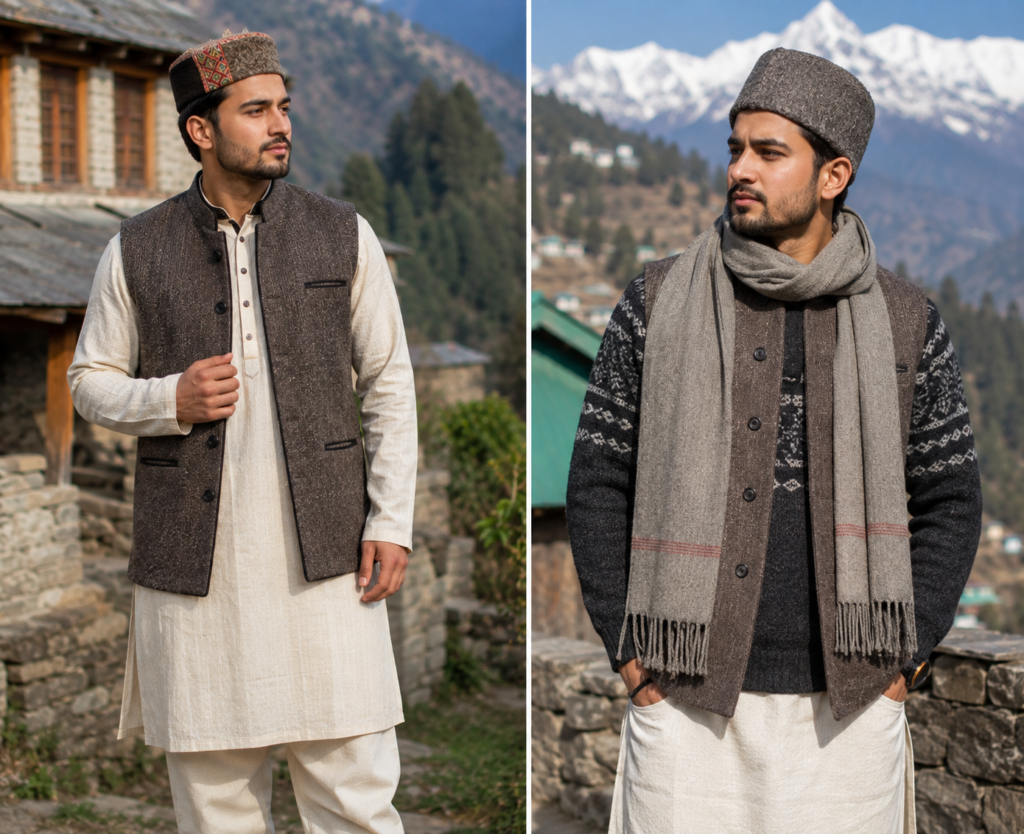
A Sadri, or traditional waistcoat, may be worn over a kurta. In the colder Himalayan regions, woollen caps, jackets and shawls have traditionally been important parts of everyday clothing.
These garments reflect the practical lifestyle of people living in Uttarakhand’s mountainous environment.
💍 Traditional Jewellery of Uttarakhand
Traditional Pahadi attire becomes even more beautiful when paired with traditional jewellery. Jewellery is not simply decorative; many ornaments carry cultural, social and symbolic significance.
✨ Nath
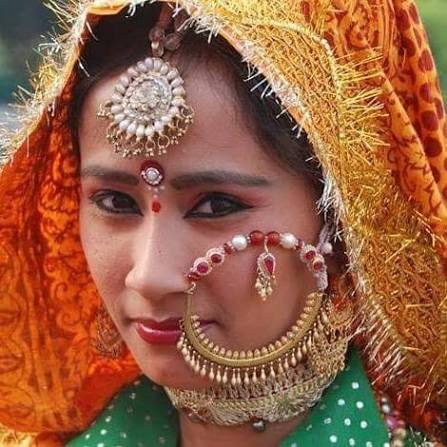
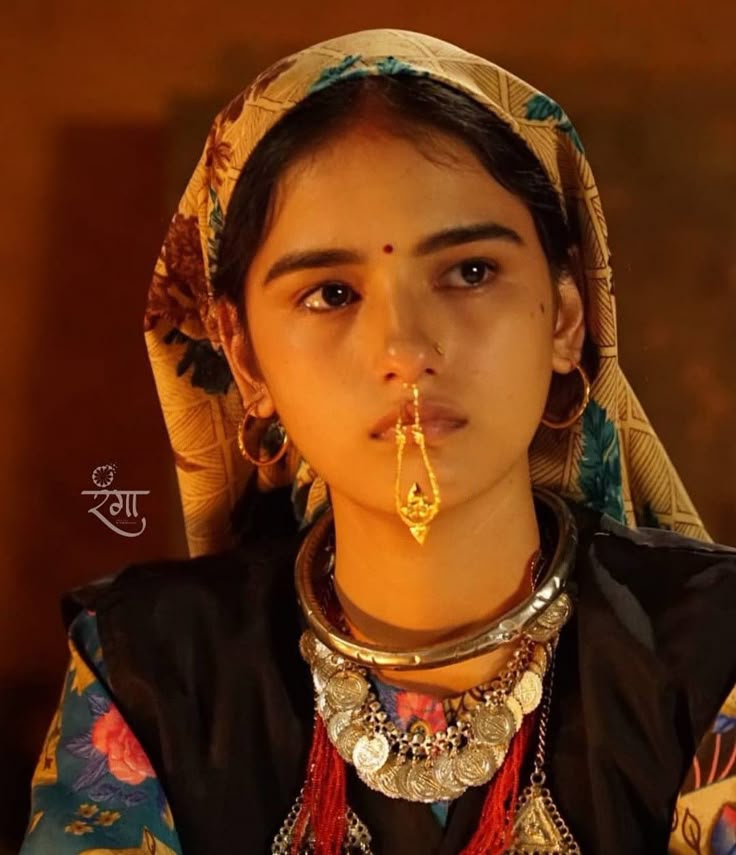
The Pahadi Nath is a large traditional nose ring particularly associated with women of Uttarakhand. It is especially prominent during weddings and festive occasions.
✨ Bulaq
The Bulaq is a traditional nose ornament worn through the septum. It is another distinctive piece of Himalayan jewellery.
✨ Guloband
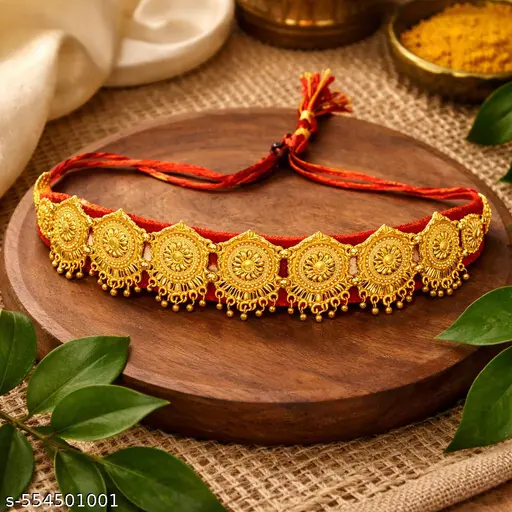
The Guloband is a traditional necklace worn close around the neck. It is especially associated with Kumaoni women and is often made using gold and colourful beads.
✨ Hansuli
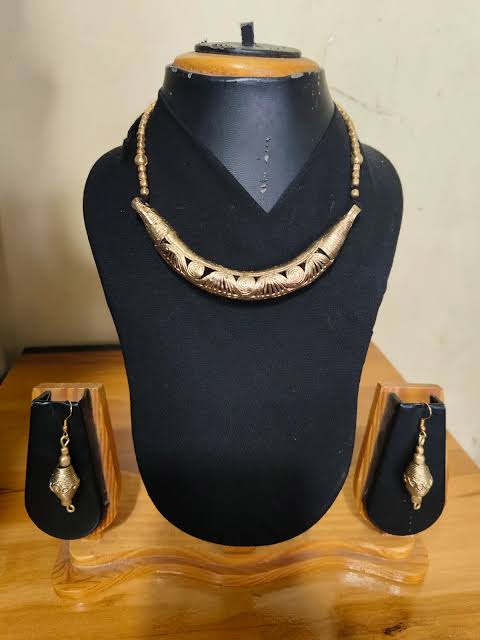
The Hansuli is a traditional rigid necklace or neck ornament. Its simple yet elegant appearance complements traditional Pahadi clothing.
✨Paunchi
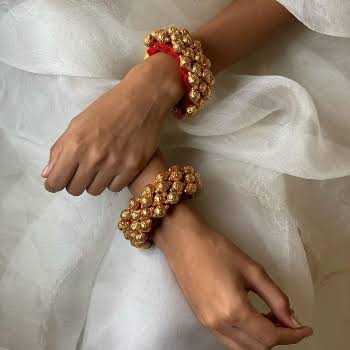
Paunchi is a traditional bracelet worn by women in Uttarakhand, especially in Kumaoni culture. Made with gold beads and colourful threads, it is often gifted during weddings and symbolizes tradition, prosperity, and family heritage.
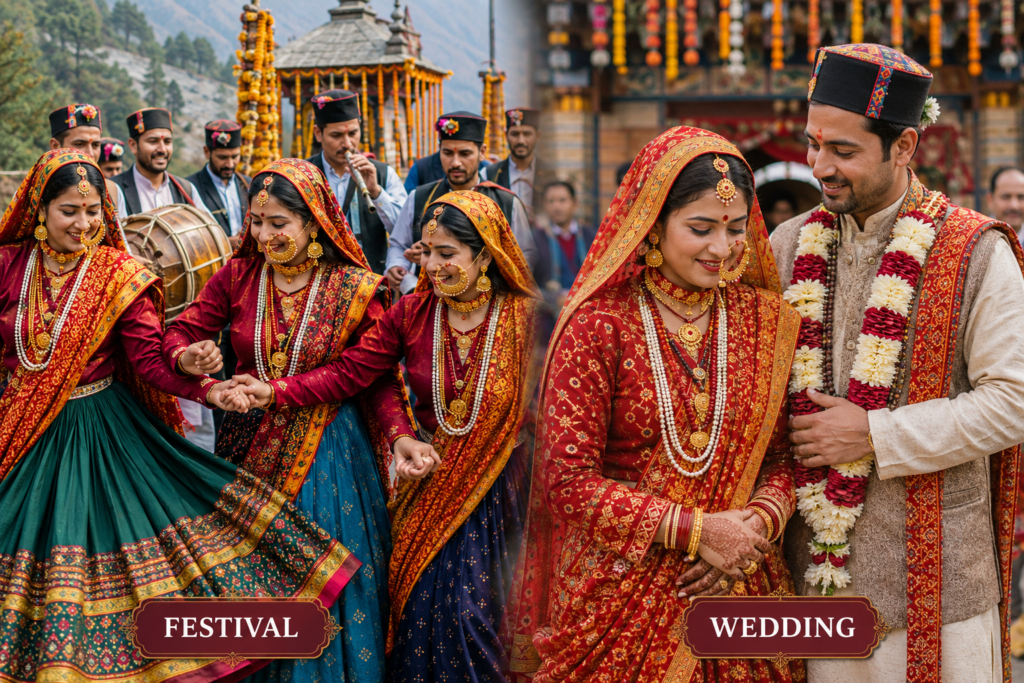
🌺 Traditional Attire During Festivals & Weddings
Traditional clothing becomes especially vibrant during festivals, weddings and religious ceremonies.
Women may wear colourful Pichoras, traditional jewellery and beautifully decorated outfits, while men may wear traditional caps, kurtas and waistcoats.
During these occasions, traditional attire transforms the celebration into a beautiful display of Pahadi identity and heritage.
🏔️ Garhwali & Kumaoni Attire
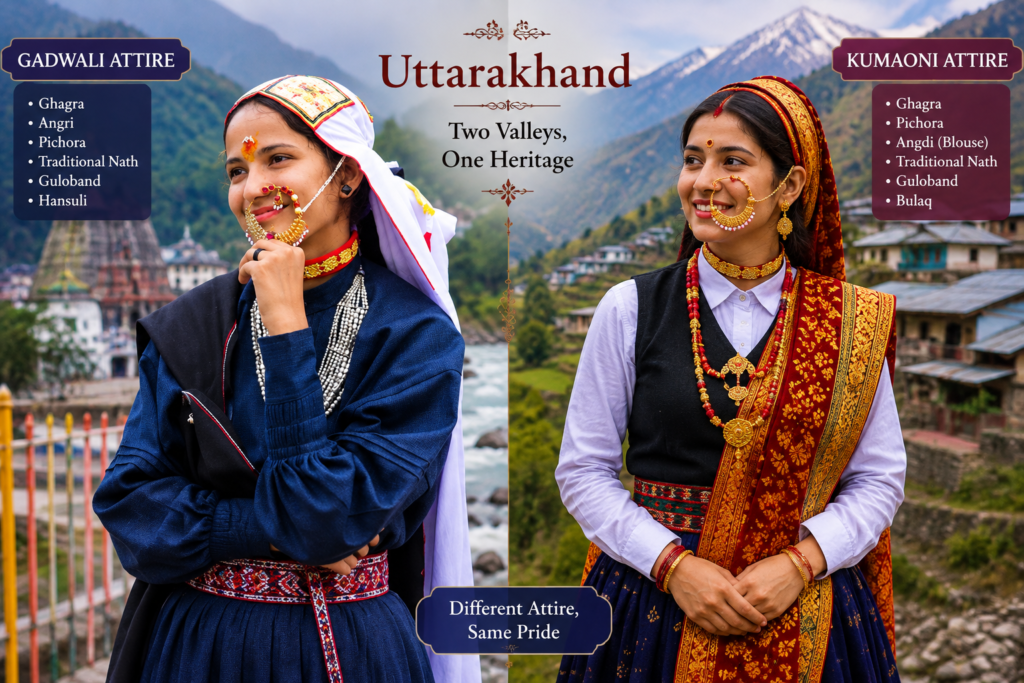
Uttarakhand has two major cultural regions — Garhwal and Kumaon — and their traditional clothing reflects their distinct cultural identities.
Garhwali attire is known for its practical hill clothing, colourful garments, jewellery and woollen accessories.
Kumaoni attire is particularly recognised for the Rangwali Pichora, traditional jewellery and distinctive festive clothing.
Although styles differ from one region to another, both traditions share a common connection to family, festivals, nature and Himalayan heritage.
❤️ More Than Just Clothing
Traditional attire of Uttarakhand is much more than fabric and jewellery. Every garment carries a piece of history.
The colours of the Pichora, the shine of the Nath, the simplicity of the Pahadi Topi and the warmth of traditional woollens tell stories of generations who have lived, celebrated and preserved their culture in the Himalayas.
Today, designers and younger generations are giving traditional Pahadi clothing a modern touch while keeping its cultural essence alive. Traditional patterns are increasingly being incorporated into contemporary dresses, shawls, jewellery and accessories.
🌿 Pahad Ki Pehchaan
Uttarakhand’s traditional attire is a beautiful expression of its people and their way of life. From the colourful Pichora to the elegant Nath and humble Pahadi Topi, every piece carries the spirit of Devbhoomi.
“Pahad ka rang, Pahadiyon ki pehchaan — libaas mein basi Uttarakhand ki jaan.”
No responses yet